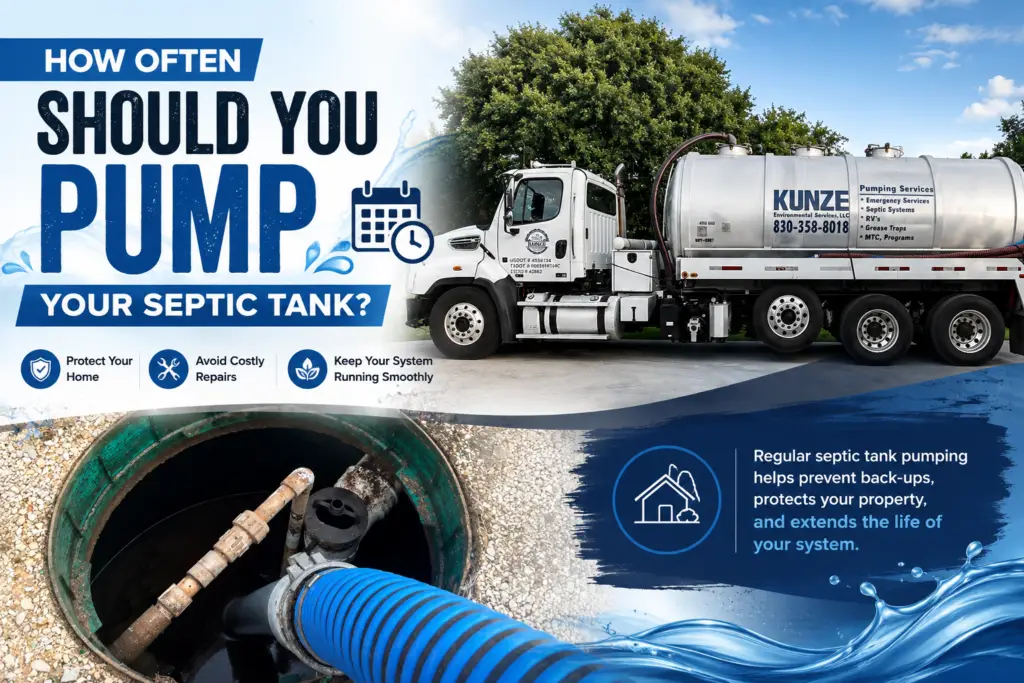
Your septic system works around the clock to safely treat wastewater from your home, but like any hardworking system, it requires regular maintenance. One of the most important services homeowners can schedule is routine septic tank pumping. Ignoring this essential maintenance can lead to expensive repairs, sewage backups, unpleasant odors, and even complete septic system failure.
So, how often should you pump your septic tank? The answer depends on several factors, including household size, tank capacity, and daily water usage. At Kunze Environmental, we help homeowners throughout New Braunfels and the surrounding Texas communities protect their investment with professional septic pumping and maintenance services.
The General Rule
Most septic tanks should be pumped every 3 to 5 years.
However, your home’s unique needs may require more frequent service.
General recommendations include:
- 1–2 people: Every 4–5 years
- 3–4 people: Every 3–4 years
- 5 or more people: Every 2–3 years
Homes with garbage disposals, hot tubs, or heavy water usage often require more frequent pumping because more solids enter the tank.
Why Septic Pumping Matters
Inside your septic tank, waste naturally separates into three layers:
- Floating scum
- Liquid wastewater
- Solid sludge
Over time, sludge accumulates at the bottom of the tank. If it isn’t removed through regular pumping, those solids can flow into your drainfield, clog pipes, and permanently damage your septic system.
Routine septic pumping helps:
- Prevent sewage backups
- Protect your drainfield
- Improve system efficiency
- Extend the life of your septic system
- Reduce costly emergency repair
A properly maintained septic system can last 30 years or longer.
Signs Your Septic Tank Needs Pumping
Even if you haven’t reached your recommended pumping schedule, watch for these warning signs:
Slow Drains
If sinks, showers, or toilets drain slowly throughout your home, your septic tank could be nearing capacity.
Bad Odors
Strong sewage smells around your yard, near your septic tank, or inside your home should never be ignored.
Pooling Water
Standing water around your drainfield often indicates your septic system is becoming overloaded.
Extra Green Grass
Unusually lush grass growing over your septic system may indicate wastewater is surfacing instead of being properly filtered underground.
Sewage Backups
If wastewater begins backing up into your sinks, tubs, or toilets, contact a septic professional immediately.
Factors That Affect Pumping Frequency
Every property is different. Several factors determine how often your septic tank should be pumped.
Household Size
The more people living in your home, the faster solids accumulate.
Tank Size
Larger septic tanks hold more waste before requiring service.
Water Usage
Excessive laundry, long showers, and heavy water consumption fill septic tanks more quickly.
Garbage Disposal Use
Food waste significantly increases sludge buildup and may require more frequent pumping.
Protect Your Septic Investment
Routine maintenance is much less expensive than replacing a failed septic system. Homeowners can also help protect their system by:
- Conserving water
- Avoiding grease disposal
- Never flushing wipes, feminine products, or paper towels
- Scheduling regular septic inspections
- Pumping the tank before problems develop
Preventative maintenance can save thousands of dollars over the life of your septic system.
Trust Kunze Environmental
At Kunze Environmental, we provide reliable septic tank pumping, septic inspections, preventative maintenance, and septic services throughout New Braunfels and surrounding Texas communities. Our experienced team helps homeowners avoid costly repairs while keeping their systems operating efficiently year-round.
Whether it’s been three years or you’re unsure when your tank was last serviced, we’re here to help.
Frequently Asked Questions
How do I know when my septic tank needs pumping?
Common signs include slow drains, sewage odors, standing water near your drainfield, and wastewater backups. However, many tanks need pumping before noticeable symptoms appear, making regular maintenance the best approach.
Can I wait until my septic system has problems?
No. Waiting until you notice problems can lead to expensive repairs and damage to your drainfield. Preventative pumping is far more affordable than replacing a failed septic system.
Does heavy rainfall affect my septic system?
Yes. Saturated soil can reduce your drainfield’s ability to absorb wastewater, increasing stress on your septic system. Regular maintenance helps minimize the risk of problems during wet weather.
Schedule Your Septic Pumping Today
If you’re due for septic maintenance or can’t remember the last time your tank was pumped, don’t wait until small issues become major repairs. Contact Kunze Environmental today to schedule professional septic pumping, inspections, and preventative maintenance. Our experienced team is committed to helping homeowners protect their septic systems and avoid unexpected breakdowns with dependable, affordable service.